
Adapting to the New Normal: 7 Productivity Hacks for Hybrid Workplaces
- Updated on: July 28, 2024

By Annalis Clint
The article provides ideas to support employees and managers in navigating the culture transition from remote work to a hybrid office, including ideas and tips on collaboration, technology, communication systems, and strategic planning for a part time office return that prioritizes employee productivity and satisfaction as well as company success.
Picture this: you wake up bleary eyed at the sound of a screaming alarm at 6am. You shuffle over to brew some coffee and prepare yourself breakfast and pack a lunch for your long day ahead. You dress to impress and fly out the door only to stuff yourself into a crowded train or be greeted by a wall of bumper-to-bumper traffic.
By the time you arrive at the office disheveled and out of breath, you already feel drained. You look forward to greeting your co-workers, but instead…the office is completely vacant, and you’re the only one who showed up.
After all that effort, you find yourself taking meetings on Zoom all day with your remote team. Making matters worse, you are desperately behind because while you were trekking to work, everyone else was getting a head start on the day.
As frustrating as this sounds, it’s the experience millions of employees are having as the workforce attempts a clumsy office re-entry. And for those who make the effort, it is understandably leaving a negative impression.
According to a recent survey by Flexjobs of employees who transitioned to remote work during the pandemic:
- 65% of respondents expressed their desire to continue working remotely on a full-time basis even after the pandemic
- 58% said they would actively search for new job opportunities that offer remote work options if these aren’t available in their current position
- 46% believed that going back to the office would result in less flexibility
It’s clear that forcing employees back into the office full-time will only put your company at a fierce disadvantage. Top talent is prepared to flock to organizations that empower them with the autonomy and flexibility that allows high performers to thrive.
Fortunately, there seems to be one solution that introverts and extroverts, managers and employees alike can perhaps agree on: a hybrid approach that accommodates both remote and in-office working styles. With just a little planning and organization, you can set your team up for a smooth transition into a hybrid schedule. Before anyone sets foot back into your office, these six strategies can help you avert disaster and navigate a brave new hybrid world.
Willing to create and maintain new habits? Get your free PDF version of Eisenhower Matrix now!
1. Leverage technology, such as document workflow automation
In a hybrid workplace, document workflow automation can be a game-changer. By automating repetitive and manual tasks involved in document management, organizations can save valuable time.
For example, HR teams can save five to twelve hours per week by automating routine document workflows, such as benefits enrollment, new hire paperwork, and internal employee communications.
Instead of manually circulating physical documents or emailing attachments, a cloud-based document workflow automation tool can handle the entire process digitally, notifying relevant stakeholders and keeping track of progress.

2. Dedicate a monthly “In Office” anchor day
When planning their hybrid strategy, many offices are turning to “anchor days” – one day each week or month when everyone plans to arrive IRL. But between childcare conflicts and varying schedules, selecting a day everyone can agree on may be like herding cats.
That’s why booking anchor days in advance will give everyone plenty of notice to plan. Create a consistent cadence and track your monthly or bi-weekly anchor day on a shared team calendar. You might even want to offer an incentive, such as a team lunch, that will make it enjoyable for everyone.
Coordinating your anchor day with another team may also be an opportunity to encourage company-wide collaboration. However, be careful that you do not overbook your office. Many offices have been downsized since the pandemic, and rushing everyone back in at once has resulted in many employees with no desk to work at.

3. Set expectations
Some managers struggle with the idea of not being able to oversee their employees’ work directly. How do you know if your employees are staying productive if you can’t see them?
The reality is, the amount of hours an employee clocks mindlessly staring at their screen or rubbing elbows at the office is going to have very little impact on your bottom line. That’s why in a hybrid world, a more effective way to measure an employee’s progress is through output and results. By setting clear and measurable objectives tied to performance, organizations can ensure hybrid workers are focused, effective, and aligned with the company’s strategic objectives.
Define how you will be evaluating performance by setting goals, timelines, and project deadlines. An ongoing task list can help you track long-term projects to completion. Taking detailed notes in your weekly meetings and following up with an action item summary can also ensure important milestones don’t get missed.
4. Stay flexible
According to a survey, 65% of respondents believed they would be more productive in a home office compared to a traditional workplace. This productivity surge can be attributed to fewer distractions, reduced commuting time, and the ability to create a customized work environment. Other employees may prefer to go into the office more to attend meetings or find focus away from home.
Encourage your team to embrace systems and schedules that support their unique style. Offering a sense of autonomy will establish trust that will improve both the well-being and efficiency of your workforce. By providing your employees with flexible hours and work-from-home options, you can help them better adapt to their new hybrid work schedule and prevent burnout.
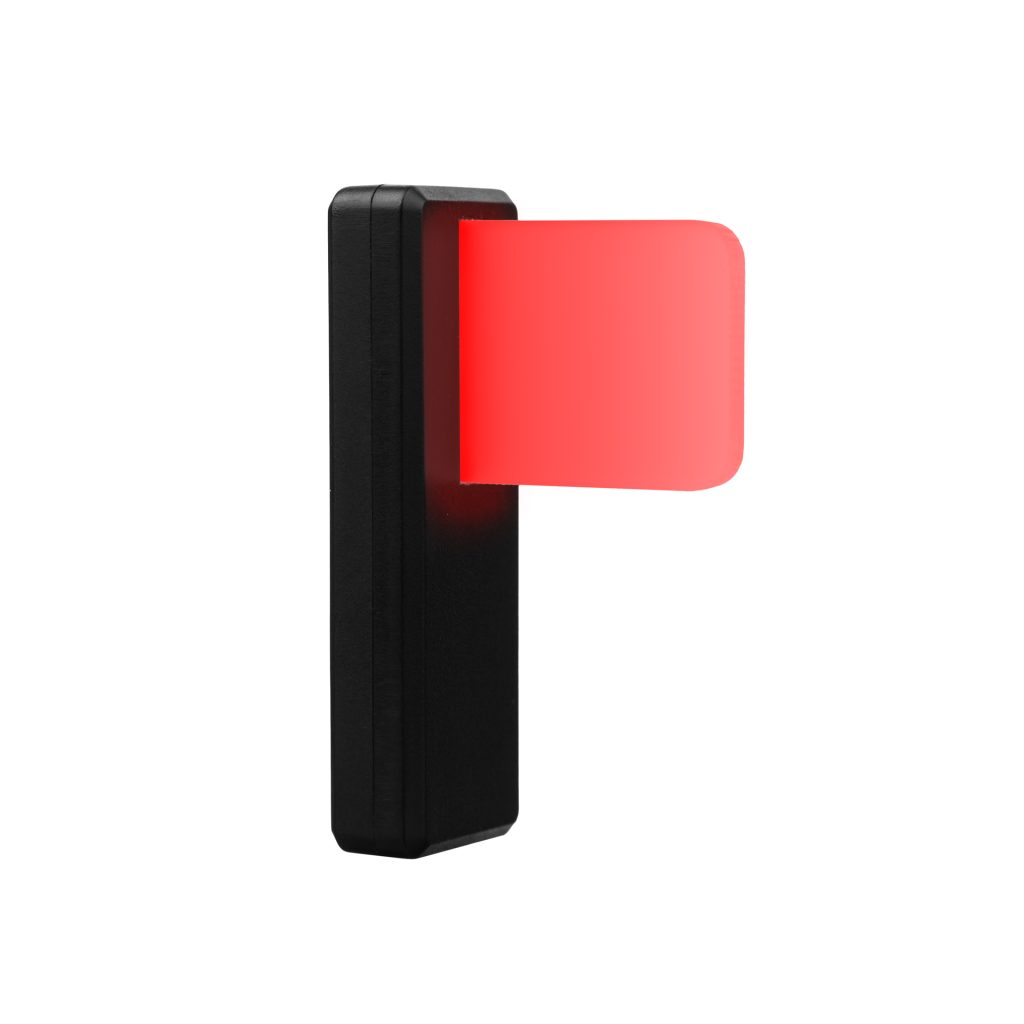
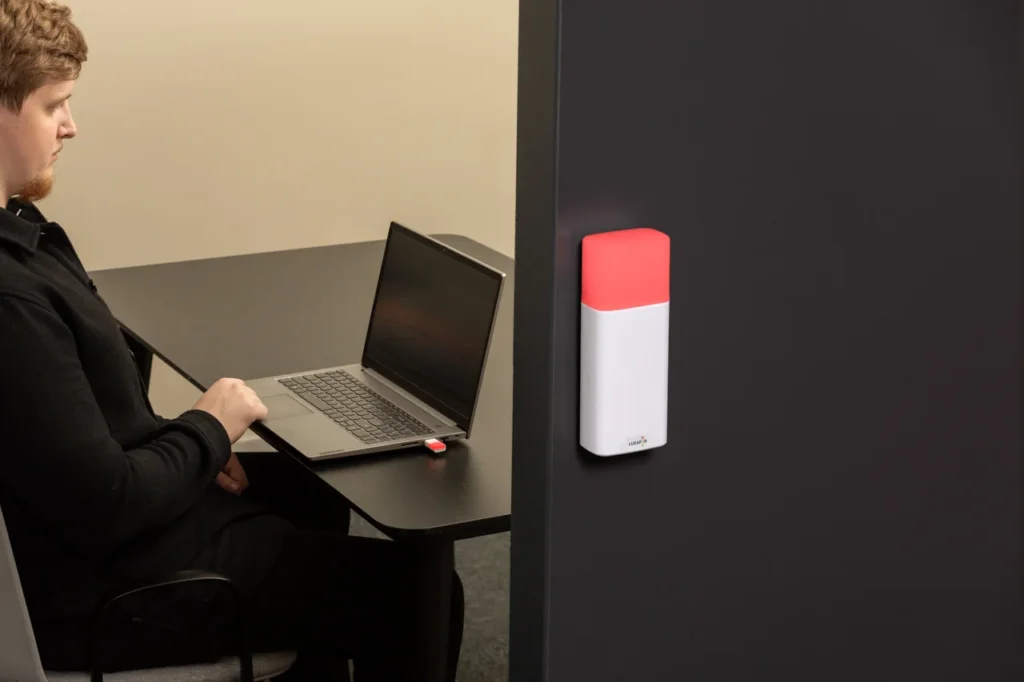
Luxafor Flag busy light
5. Set your new hires up for success
Older generations have been able to “learn by example” by observing more experienced colleagues on the job. New hires and entry-level employees beginning their careers in a hybrid era may not have the same opportunities. This may put Gen Z at a disadvantage as they attempt to find their footing in a fast-evolving work setting.
Fortunately, major advances in online learning and collaboration technology can save the day. Screen recording tools like Loom can enable employees to create narrated work demonstrations for flexible remote learning. Recording demonstrations with Zoom meetings can allow new hires to reference training videos multiple times.
Additionally, platforms like LinkedIn Learning and airSlate Academy support a new hire’s success. Comprehensive training in hybrid team dynamics is crucial to cover remote communication, digital tools, time management, and work-life balance. Equipping new hires with essential skills in self-motivation and proactive communication will empower them to thrive in the fast-evolving remote work landscape.

6. Prioritize your workforce’s wellbeing
In a hybrid work environment where employees have to juggle work and home life, companies that ensure employees feel valued and supported tend to see higher productivity levels. As humans, we respond positively to many simple things in life, such as exercise, connection, autonomy, and recognition.
Every company may approach its wellness offerings differently, but initiatives such as access to mental health services or resources and physical wellness programs such as gym memberships or incentives for exercise and healthy eating habits can make a major impact on your employee’s happiness and sanity as they navigate the new terrain of a hybrid work lifestyle.

7. Regain control of your time with the right gadgets
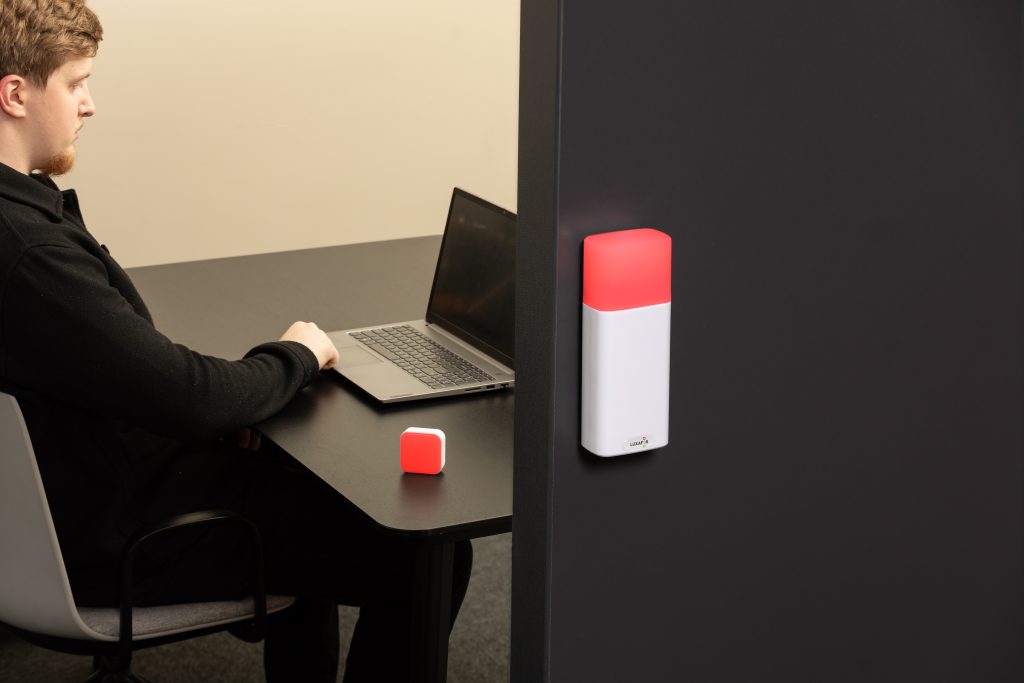
With teams scattered across different locations, hardware innovations can also serve as a powerful enabler to help you adapt to a hybrid world. As employees split their time between remote and office settings, Luxafor products provide valuable solutions to optimize productivity and communication.
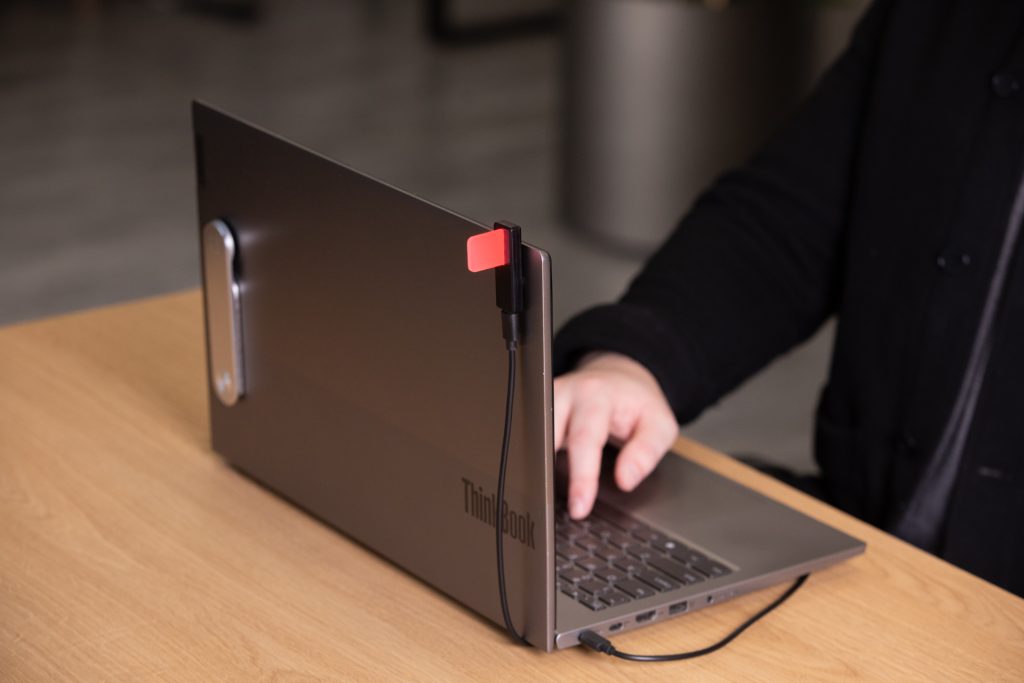
For example, the Luxafor Flag is a small LED indicator that attaches to a laptop or monitor, enabling users to display availability and status to colleagues, whether they are working remotely or in the office. By indicating their status with a simple click, users can reduce interruptions and foster uninterrupted work sessions, providing a visual cue for colleagues to know when it’s appropriate to approach.
The Luxafor Bluetooth PRO is another valuable tool that offers customizable functions and integrates with popular productivity apps. It can be programmed to trigger specific actions like muting notifications or initiating video calls. This automation reduces cognitive load and enables employees to stay distraction free while focusing on tasks.
Conclusion
The shift to a hybrid work environment has been a significant change for many companies, but it doesn’t have to be a negative one. When companies prioritize support and empathy, it can lead to higher levels of job satisfaction and employee retention in the long run. By setting boundaries, establishing expectations, using technology to stay connected, and planning ahead, HR directors and executives can help their employees stay successful in this new normal.
LUXAFOR HELPS PEOPLE TO ACHIEVE THEIR GREATEST PRODUCTIVITY LEVELS WITH A WIDE VARIETY OF OFFICE PRODUCTS. LET’S BE PRODUCTIVE TOGETHER!
Willing to create and maintain new habits? Get your free PDF version of Eisenhower Matrix now!
Adapting to the New Normal: 7 Productivity Hacks for Hybrid Workplaces
Busy Tag – Your Digital Canvas


Tags
Archives
- June 2026
- May 2026
- March 2026
- January 2026
- December 2025
- November 2025
- October 2025
- September 2025
- August 2025
- July 2025
- June 2025
- May 2025
- February 2025
- January 2025
- December 2024
- November 2024
- October 2024
- September 2024
- August 2024
- July 2024
- June 2024
- May 2024
- April 2024
- March 2024
- February 2024
- January 2024
- December 2023
- November 2023
- October 2023
- September 2023
- August 2023
- July 2023
- June 2023
- May 2023
- April 2023
- March 2023
- February 2023
- January 2023
- December 2022
- November 2022
- October 2022
- September 2022
- August 2022
- July 2022
- June 2022
- May 2022
- April 2022
- March 2022
- February 2022
- January 2022
- December 2021
- November 2021
- October 2021
- September 2021
- August 2021
- July 2021
- June 2021
- May 2021
- April 2021
- March 2021
- February 2021
- January 2021
- December 2020
- November 2020
- October 2020
- September 2020
- August 2020
- July 2020
- June 2020
- May 2020
- April 2020
- March 2020
- December 2019
- November 2019
- October 2019
- September 2019
- August 2019
- July 2019
- April 2019
- March 2019
- January 2019
- December 2018
- November 2018
- October 2018
- September 2018
- August 2018
- July 2018
- June 2018
- August 2017
- May 2017
- April 2017
- February 2017
- January 2017
- November 2016
- October 2016
- September 2016
- August 2016
- July 2016
- June 2016
- May 2016
- April 2016
- March 2016
- February 2016
- January 2016