
9 Resourceful Tips For Managing Boundaries at Work

Boundaries help you protect what is important to you and also allow you to control who and what people, events and information enter your space. Setting healthy boundaries at work is an important skill you can master to save yourself from overworking, being taken advantage of and avoid burnout that can result in mental and physical fatigue and cause other health problems in a long term if undetected.
This article will equip you with knowledge about the necessity to set your boundaries and provide you with effective strategies for protecting your boundaries, and important tools to maintain good boundary balance with your coworkers, partners, employers and other people that might be challenging your personal or professional limits.
It is never too late to take the first step towards regaining your power, confidence and overall satisfaction with work. Read on to unlock the tools you need to navigate your work relationship and set boundaries more effectively, leading to a confident and successful life. With the help of these 9 tips you will be able to define the boundaries that are vital for your growth, productivity and sense of calm in situations that previously seemed challenging. So please consider using these methods to help you set boundaries at work or even outside of work:
1. Set priorities
In order to set boundaries, it’s helpful to first consider what your priorities are in life and at work, showing what you value the most and what holds the most importance and should be non negotiable.
Prioritization is the essential skill that you need to make the very best use of your own efforts, time, resources and those of your team. It is also a skill that you need to create calmness and space in your life so that you can focus your energy and attention on the things that really matter.
Setting priorities is particularly important step when time is limited and demands are seemingly unlimited. It helps you to allocate your time where it’s most-needed and most productive, freeing you and your team up from less important tasks that can be attended to later or dropped out of the schedule.
With proper priorities, careful planning as well as responsible management of your tasks you can bring order to your endless to-do lists, reduce stress, and move towards a successful completion of your most urgent projects. Without clear priorities you can get lost and confused whenever a new distraction or task pops-up adding to already busy schedule.
Do you want to build and maintain new habits? Get your free PDF version of the Don't Break The Chain calendar and start today!
Do you want to build and maintain new habits? Get your free PDF version of the Don't Break The Chain calendar and start today!
2.Delegate some of your tasks
Delegation means that you can redirect and outsource tasks, new projects and initiatives to other team members depending of the relevance of the task. You might delegate work to distribute responsibility more evenly, or because the task is more relevant to another team member’s priorities, skills, or interests.
Knowing when and how to delegate makes you a better manager of your work and time, and will allow you to do the things that matter the most. Not only does delegating help you get your high-impact work done, but it also gives team members an opportunity to get involved in other interesting projects with added responsibility. Effective delegation can help to foster new skills and allows team members to develop new strengths and work on team-building.

3.Communicate clearly
Clear communication is critical to business and personal success, but it is not the easiest skill to develop within a professional setting and busy work environment. First, you must ensure that you have a clear message about your boundaries in your own mind. Do you know what are you trying to achieve? How will you communicate the message in an open, honest and polite, but assertive way?
You will have to try to develop strong communication skills in order to express your thoughts to others and set clear boundaries. This can help you explain what your boundaries are and why you need them. Communication often can solve issues that cause the need for boundaries, so learning how to communicate with your supervisor and colleagues may help you create a healthier work environment.
Clear and unbiased communication in the workplace is important, because it boosts employee morale, engagement, productivity, and work satisfaction. Communication is also key for better team collaboration and cooperation. Effective workplace communication not only allows to set better boundaries, but also helps to deliver better results for individuals, teams, and organizations.

4.Understand your workload
These days it seems like most people have too much on their plates. Almost everyone no matter the age, the speciality or status complains about feeling overworked. So how do you tell your boss you simply have too much to do? When you feel too busy, it can be helpful to get other people`s perspective on your workload. Having a candid conversation with your manager about your workload requires the right mindset and preparation on both sides.
It is wrong to assume that you are supposed to be overwhelmed with work. You really are allowed to talk to your boss about your workload. Here are some of the things you can do to prepare for that discussion:
- Document your tasks
Get more specific and strategic about the general duties on the daily basis and the tasks that are out of your capacity. So you can have a clear list of everything on your current to-do list, along with dates by which those tasks need to be completed.
- Analyze your workflow
When you have documented the set of the tasks, you should also be clear about where particular requests come from, how do you manage them and who you are passing your completed work to.
- Suggest and set priorities
When you know the amount of work you are dealing with, you will have to make adjustments so the work can be done more efficiently. You will have to determine which tasks will get done and which ones will either be put aside for later or delegated to someone else.

5.Respect the boundaries of others
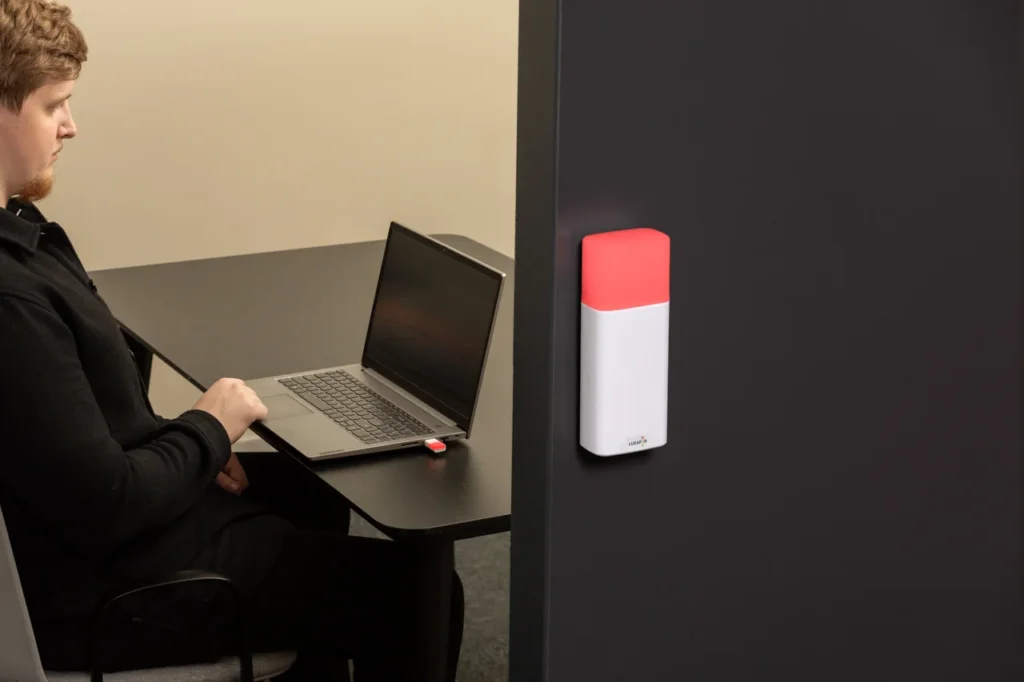
Remember to respect boundaries of others while setting your own. Learning about boundaries of your managers and colleagues and respecting them encourages them to do the same for you. This practice will create a safe work environment for everyone. In order to discover your colleagues’ boundaries, consider asking them specific questions and paying attention to their work patterns, habits and values. Having an established form of communication within your workplace also helps with this, for example – various do not disturb lights can indicate the availability of your team members and provide you with an uninterrupted work time.
Along with setting your personal and professional limits, it can be beneficial to get to know your coworkers by learning more about their personalities, likes and dislikes. Also you get to decide how much personal information you want to share with others. In every workplace it is essential for all employees to feel safe, respected and valued, therefore a clear policy about work ethics, internal culture and structure can support an effective and respectful environment.
Luxafor Flag busy light
Eliminate distractions;
Achieve deep work by controlling your workflow;
- Get it for as little as $33
6.Take time off
It is easy to stretch yourself too thin when you have agreed to take up too many tasks, so you have to draw a firm boundary for yourself what are your non-negotiable work-life rules and requirements. For example, those rules can be saying no to working longer hours, taking your work assignments home or working during the weekend, for each employee and company these rules may differ.
But remember to take time away from communication platforms, work chat, work emails as well as phone calls on your time off and inform your seniors and team mates about those terms. Also, when using vacation time, set out-of-office reminders and log off so you are not disturbed by work notifications and can truly relax and recharge.
7.Ask for advice
When you are facing a problem at work, consider asking your management, HR or one of your colleagues for advice. That is how you can gain support and an input from someone who is not involved in the situation and they may have experience with a similar issue or can give a useful advice or solution to your problem. Other professionals also can give more objective advice and be able to help you set boundaries and recommend better strategies for you to maintain a better work-life balance.
Don`t be afraid or intimidated to ask – offering advice is a sign of good leadership, and asking for advice is a sign of intelligence. In the end, when you have resolved the lingering issue, you can be sure the both parties will benefit form an empowering and open communication. Be kind and show gratitude as showing that you’re humble and appreciative will help in maintaining good relationships with those in your professional network.

8.Set a clear schedule
Try to establish a clear working schedule and share this schedule with your colleagues. This can include meeting with your manager to discuss the best hours for you to work in order to reach your professional goals. For example, you may set a boundary that you’re only available to check your email during work hours or between specified times. This allows you to focus on other tasks and reminds others of your availability.
Effective scheduling can help with time management, provide you with a daily routine, and solidify a work-life balance. There are many different planning methods to help you schedule your workday to boost productivity, some of them are mentioned below:
- Prepare a to-do list. Start by writing down all of the tasks you have to complete—it might be a set of errands, household chores, or work obligations for the day or the whole week;
- Identify key tasks. Get organized by starring or underlining the most important tasks;
- Make an order of importance and timeliness. After identifying the most urgent tasks, you can make a list of tasks you must accomplish first;
- Set time frames. You can use a physical planner or digital programs to organize your tasks by a certain time frame;
- Stay on track. An app for scheduling can help avoid procrastination and keep you on top of your work;
- Don`t forget about personal time. Maintaining a work-life balance is essential. When you look at your schedule, you have to have some free space of time for your needs.
9.Stand up for yourself
While most people in working environment will respect your boundaries, from time to time you may encounter someone who disagrees with a boundary you have set. Because of this, it’s helpful to prepare for confrontations by understanding what you can compromise and practice patience. If someone tests your boundary, try to respectfully explain your limits and what you would prefer to do instead. While many confrontations don’t progress to the point of escalation, consider informing your supervisor or HR about the situation and seek for the most appropriate solution together.
When someone crosses your boundaries, even though it can be uncomfortable, it’s important to say something. If you ever feel harassed or bullied by a coworker or feel a particular coworker is continually making you feel uncomfortable, it’s important to inform the responsible department of the company. Not only do you want to create an environment where you feel safe and respected, but you also want to do the same for your coworkers. Overall, setting up boundaries at work can be vital when it comes to helping you navigate different social situations and figuring out when and how to deal with it an uncomfortable situation or potential work conflict.
To sum up
As you already know – boundaries cultivate more productive work environments and empower individuals to make healthier decisions for them and for others. Sometimes differing values, needs and beliefs in workplace can lead to a conflict, resentment and stress, so clearly defined boundaries can help to prevent these negative reactions. These 9 tips will help you assess, strengthen and maintain your own personal boundaries, in order to make life easier and more rewarding for you and those around you.
When you use some of these tools such as learn to set priorities, delegate and communicate clearly and effectively – be it a family member, coworker, romantic partner, boss or friend – it can make all the difference. If not, there are many other ways to make your boundaries matter with the management of your workload and schedule, taking time off, standing up for yourself and, if all else fails – asking for advice in a complicated situation. With all the provided tips in this blog you will certainly be able to define the limits that are important to you and master the skill to maintain solid boundaries with people around you whether at work, in social settings or even at home.
LUXAFOR HELPS PEOPLE TO ACHIEVE THEIR GREATEST PRODUCTIVITY LEVELS WITH A WIDE VARIETY OF OFFICE PRODUCTS. LET’S BE PRODUCTIVE TOGETHER!
Do you want to build and maintain new habits? Get your free PDF version of the Don't Break The Chain calendar and start today!
Do you want to build and maintain new habits? Get your free PDF version of the Don't Break The Chain calendar and start today!
9 Resourceful Tips For Managing Boundaries at Work


Busy Tag – Your Digital Canvas



Tags
Archives
- June 2026
- May 2026
- March 2026
- January 2026
- December 2025
- November 2025
- October 2025
- September 2025
- August 2025
- July 2025
- June 2025
- May 2025
- February 2025
- January 2025
- December 2024
- November 2024
- October 2024
- September 2024
- August 2024
- July 2024
- June 2024
- May 2024
- April 2024
- March 2024
- February 2024
- January 2024
- December 2023
- November 2023
- October 2023
- September 2023
- August 2023
- July 2023
- June 2023
- May 2023
- April 2023
- March 2023
- February 2023
- January 2023
- December 2022
- November 2022
- October 2022
- September 2022
- August 2022
- July 2022
- June 2022
- May 2022
- April 2022
- March 2022
- February 2022
- January 2022
- December 2021
- November 2021
- October 2021
- September 2021
- August 2021
- July 2021
- June 2021
- May 2021
- April 2021
- March 2021
- February 2021
- January 2021
- December 2020
- November 2020
- October 2020
- September 2020
- August 2020
- July 2020
- June 2020
- May 2020
- April 2020
- March 2020
- December 2019
- November 2019
- October 2019
- September 2019
- August 2019
- July 2019
- April 2019
- March 2019
- January 2019
- December 2018
- November 2018
- October 2018
- September 2018
- August 2018
- July 2018
- June 2018
- August 2017
- May 2017
- April 2017
- February 2017
- January 2017
- November 2016
- October 2016
- September 2016
- August 2016
- July 2016
- June 2016
- May 2016
- April 2016
- March 2016
- February 2016
- January 2016