
Beyond the 25-Minute Baseline: How to Find Your Personal Deep Work Rhythm

Invented in the 1980s, the Pomodoro Technique has now become known all over the world. While its simplicity is genius and serves as a powerful starting point for building focus habits, strictly adhering to these short bursts is just the beginning. As knowledge workers find their rhythm, standard intervals can sometimes pause their flow right at the peak of their productivity—signaling it's time to evolve the technique.
Everyone has their own biological rhythm, so molding productivity into predetermined time intervals might not be the best idea. It turns out we can learn a lot about our productivity by examining our work habits and patterns.
The Neurobiology of the Focus Ramp
To make the traditional Pomodoro Technique even more powerful, we can customize it to account for ultradian rhythms, or natural cycles, that occur every 90 to 120 minutes. Research into the basic rest-activity cycle (BRAC) has demonstrated that our energy, alertness, and cognitive ability are subject to predictable ebb and flow.
When an individual begins a complex task, the brain experiences what's known as a "focus ramp," during which the prefrontal cortex activates attention networks and suppresses distracting stimuli. This focus ramp can last anywhere from fifteen to thirty minutes. So, what happens when the interval ends at 25 minutes? Depending on your personal focus ramp, peak cognitive function might just be hitting its stride, meaning a rigid 25-minute cutoff asks the brain to pause prematurely.
At Luxafor, we believe success and productivity are a result of a specific equation:
Physical health + workload optimisation + productive environment + the right tools = Ultimate Productivity.
Pillar 1: Physical Health and Biological Alignment
The bedrock of any cognitive output is physical well-being. You can invest in the best technology available, but you will achieve very little if your biological foundation is unstable. Take a morning person—the best strategy for them would be to accomplish the biggest challenge of the day early on, as their productivity peaks around 8:00 AM. Night owls, on the other hand, should start their day slower, as they will only reach their heights later on during the day.
As a matter of fact, everything depends on our sleep and chronotypes—genetic predispositions that dictate our energy peaks. In addition to sleep, it is important to take into account how our ultradian cycles function. When our energy levels dip, our body enters a period of recovery during which our levels of cortisol and other stress hormones may build up if we try to continue pushing through.
Pillar 2: Workload Optimisation through Data-Driven Analysis
Workload optimization is not about being busy—it’s about efficiency. A lack of organisation in the workload is a primary driver of procrastination and focus loss.
One of the most important tools for efficient workload management is the Eisenhower Matrix. It allows us to differentiate between urgent, pivotal activities and filler tasks, so that we can complete the most challenging tasks at our peak, and fill the rest of the time with less important things.
Pillar 3: Establishing Your Personal Focus Baseline
To transition away from arbitrary timers, you must establish your own baseline through a focus audit. For two weeks, work without a pre-set timer and record the exact moment your concentration naturally falters. Note the duration, the task type, and your subjective focus score from one to ten.
You can plug the collected data into a mean, median, mode calculator—but pay attention to the results. While the mean may tell you how long your average focus time is, you should really focus on the median—it dismisses outliers, such as that time a phone call interrupted your creative flow or when a deadline was chasing you, forcing you to pull a three-hour-long session.
Now, if your data has shown that you work best in 50-minute intervals, you can evolve the traditional Pomodoro Technique by doubling your timer to match your natural rhythm for maximum productivity. So, take a look at your habits and make sure that you organize your work in a way that works for you.
Pillar 4: The Architecture of a Productive Environment
A cluttered or noisy workspace is a silent killer of motivation. However, the most significant threat to a productive environment in the modern office is the paradox of connectivity: the constant interruptions from colleagues that cost an average of twenty-three minutes in refocus time.
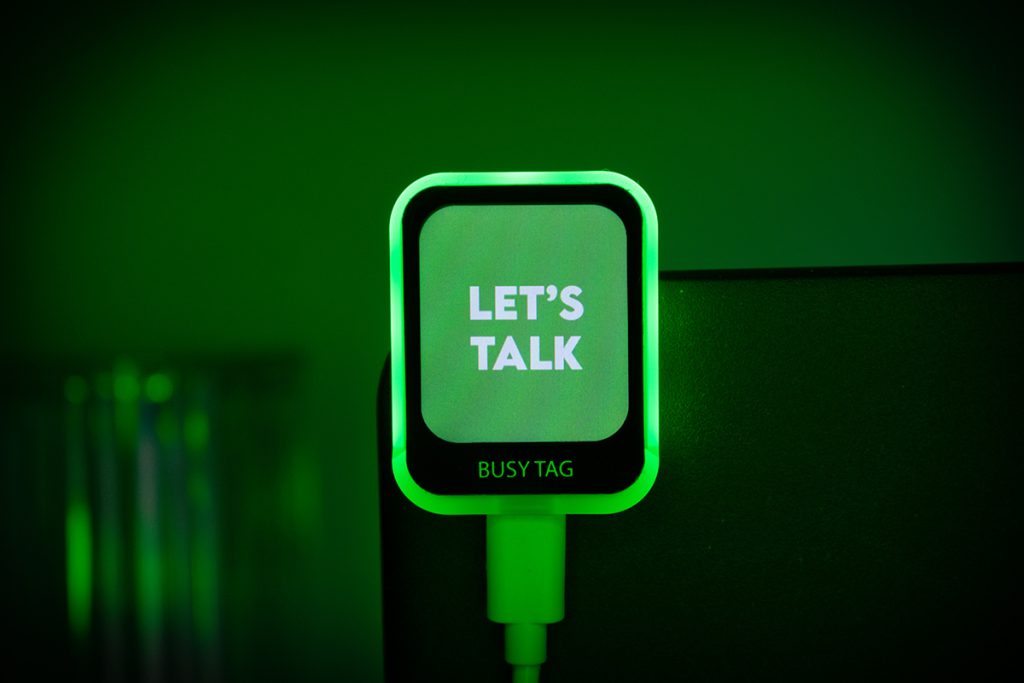
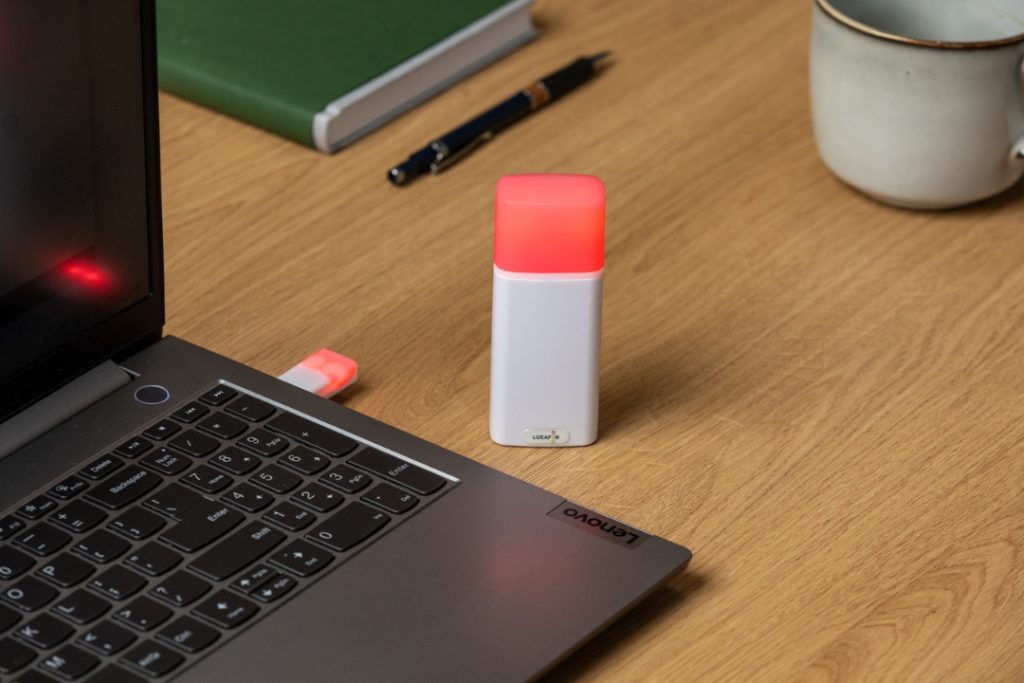
A truly productive environment requires visual availability signals. By establishing a shared language of focus, teams can protect each other’s deep work windows. Using a simple colour-coded system allows everyone to understand the current status of a colleague without a single word being spoken:
- Red: Deep focus or “Do Not Disturb.” Interruptions are strictly avoided.
- Green: Available for collaboration or quick questions.
- Yellow: Transitioning between tasks or away from the desk.
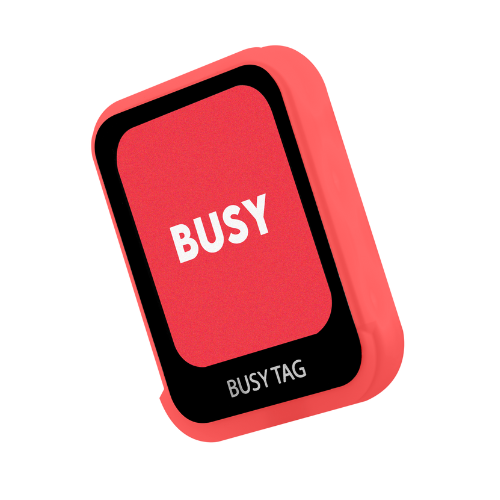
Busy Tag: Stay focused and avoid distractions
Pillar 5: The Right Tools for Focus Protection
The final component of the formula is the implementation of tools that automate these principles. Professional-grade hardware does not just track time; it creates a physical boundary for concentration.
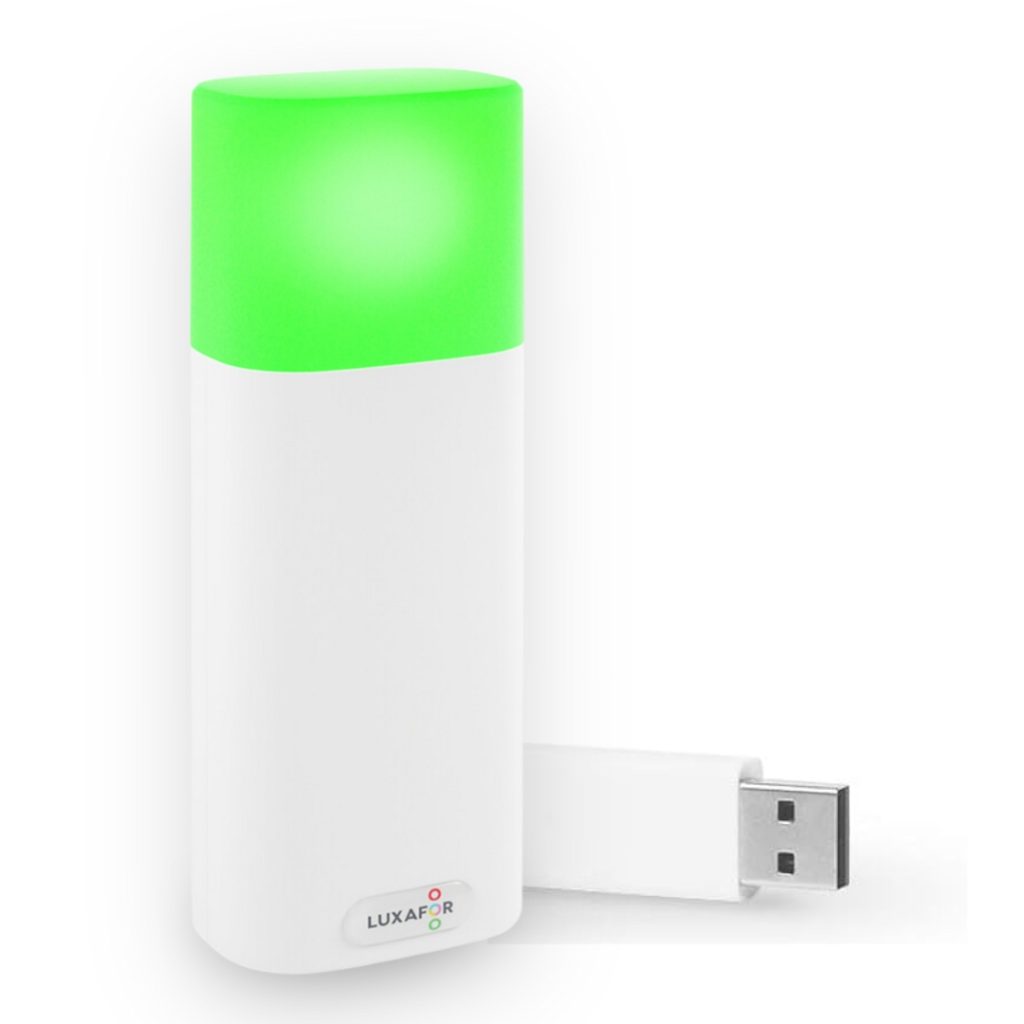
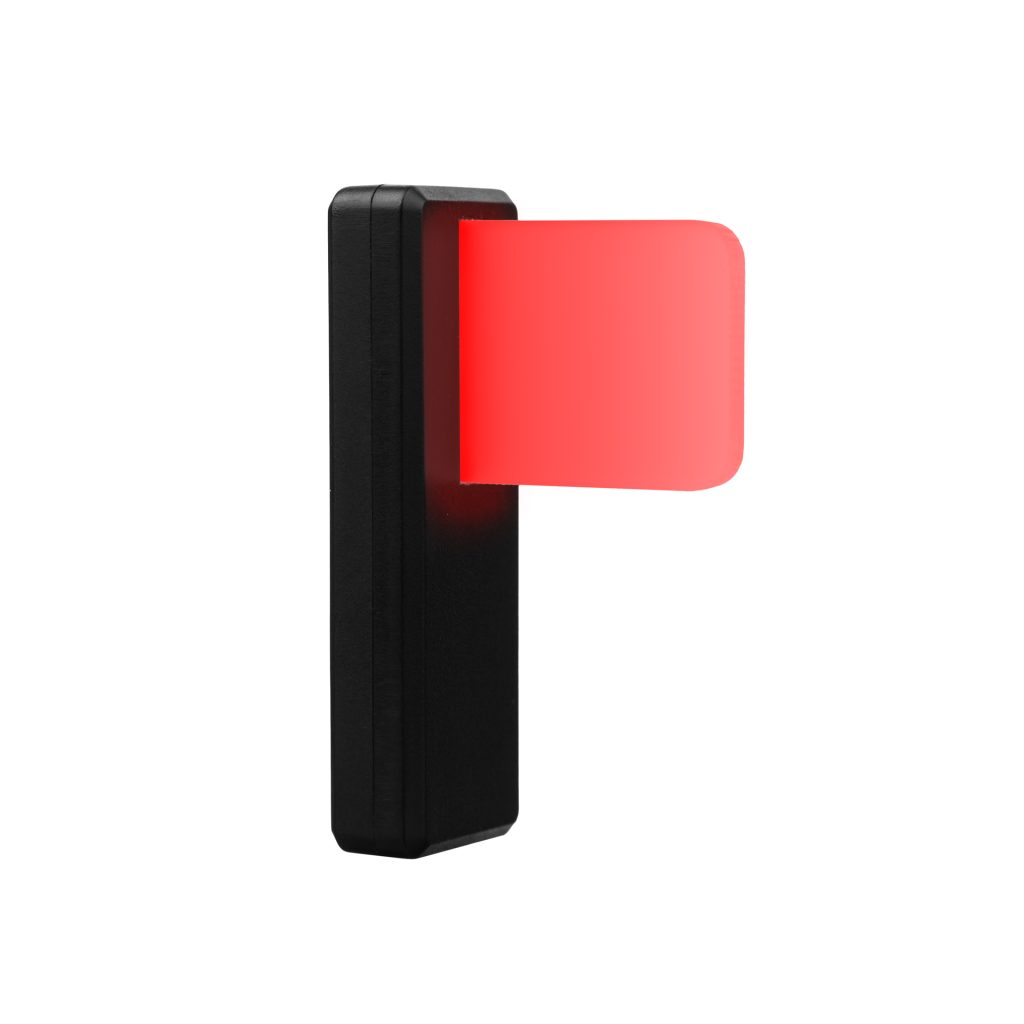
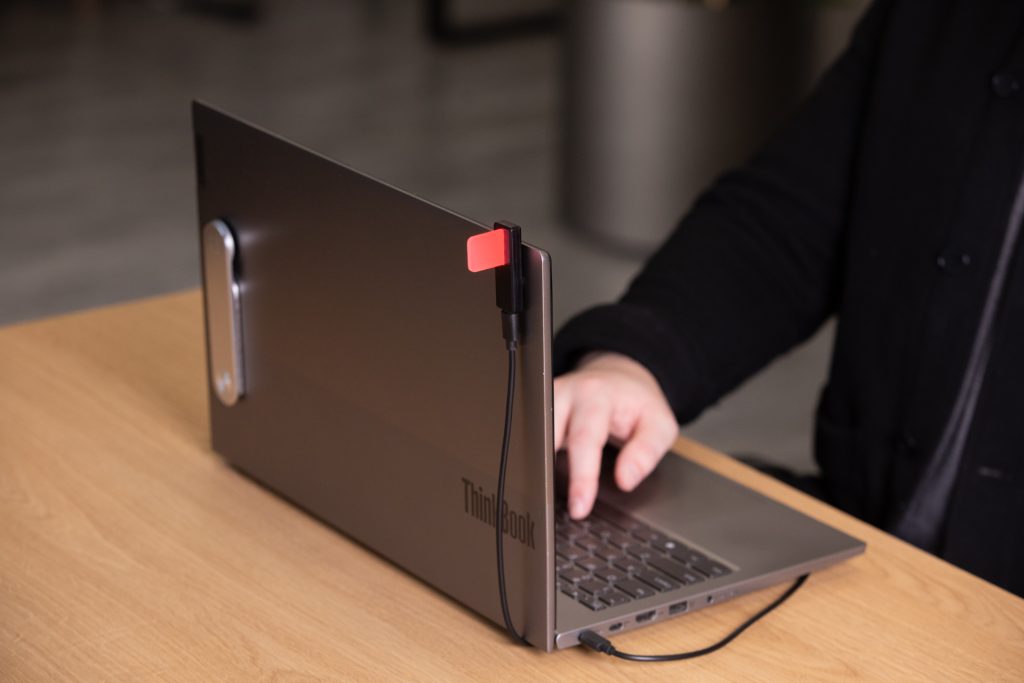
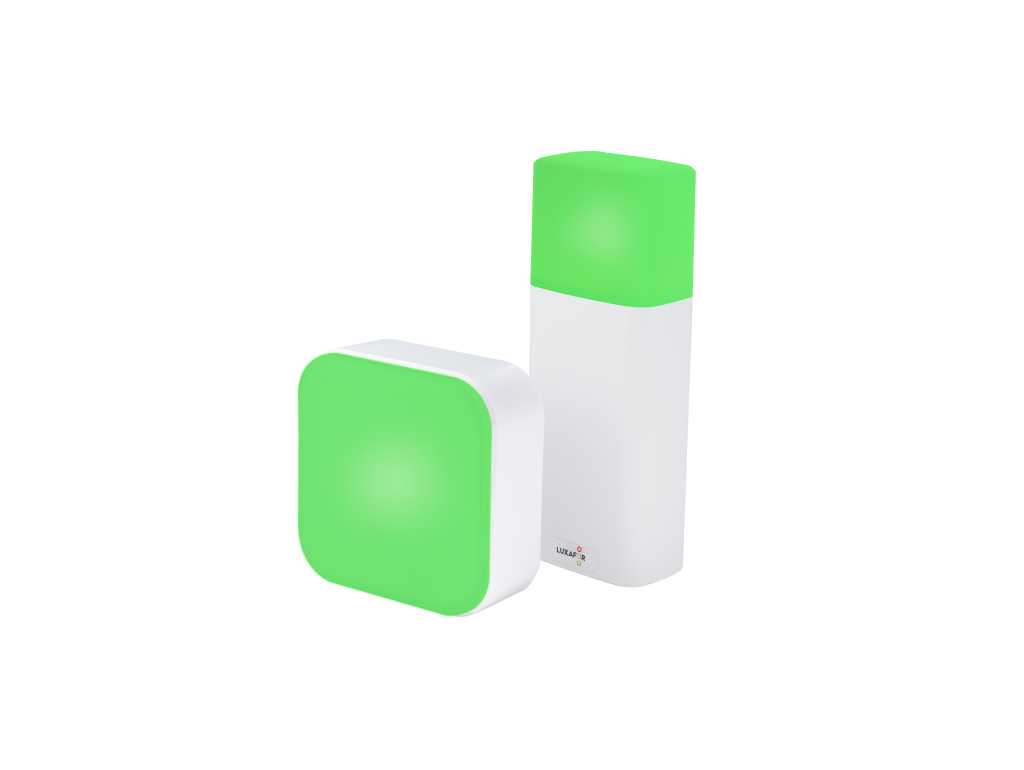
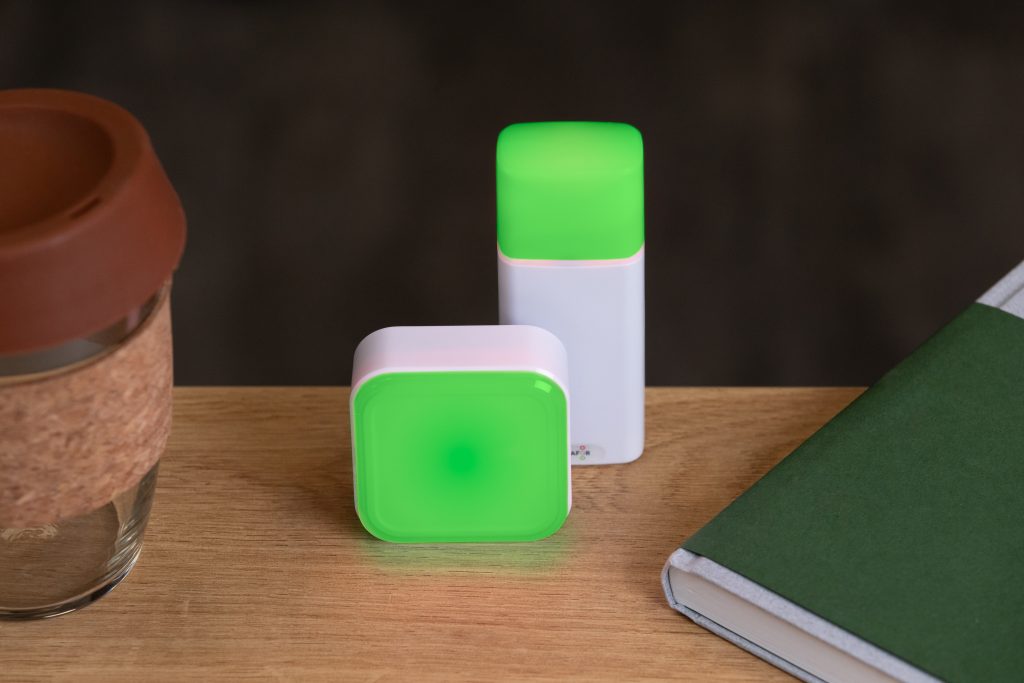
The Luxafor Flag 2 is a workstation busy light that integrates with your calendar and communication apps. By automatically turning red when you are in a meeting or a deep work block, it removes the friction of manually updating your status. For those in hybrid or home environments, the Luxafor Switch Pro 2 offers a wireless, app-free solution that can be placed outside a room to signal your professional status to household members.
For those who find value in the trigger of a timer but require flexibility, the Luxafor Pomodoro Timer allows you to define your own intervals based on your focus audit results. Instead of a jarring alarm, it uses discreet vibrating alerts, allowing you to transition into a recovery phase without breaking the mental momentum of those who have reached a successful flow state.
Conclusion: Individual Productivity Leads to Success
Nobody fits perfectly into a rigid, general mold. Our focus, productivity, and efficiency are a vector sum of our mental and physical well-being, combined with workload optimization and the influence of our environment.
Evolving beyond a standard 25-minute interval to find your personal rhythm is the first step in creating a better work-life balance. Individual productivity is the engine that drives business productivity, ultimately leading to greater profits and personal satisfaction in the international business environment. By auditing your focus and respecting your biological rhythms, you stop fighting the clock and start surfing the wave of your true potential.
Show your colleagues when you're busy!
Beyond the 25-Minute Baseline: How to Find Your Personal Deep Work Rhythm
Tags
Archives
- March 2026
- January 2026
- December 2025
- November 2025
- October 2025
- September 2025
- August 2025
- July 2025
- June 2025
- May 2025
- February 2025
- January 2025
- December 2024
- November 2024
- October 2024
- September 2024
- August 2024
- July 2024
- June 2024
- May 2024
- April 2024
- March 2024
- February 2024
- January 2024
- December 2023
- November 2023
- October 2023
- September 2023
- August 2023
- July 2023
- June 2023
- May 2023
- April 2023
- March 2023
- February 2023
- January 2023
- December 2022
- November 2022
- October 2022
- September 2022
- August 2022
- July 2022
- June 2022
- May 2022
- April 2022
- March 2022
- February 2022
- January 2022
- December 2021
- November 2021
- October 2021
- September 2021
- August 2021
- July 2021
- June 2021
- May 2021
- April 2021
- March 2021
- February 2021
- January 2021
- December 2020
- November 2020
- October 2020
- September 2020
- August 2020
- July 2020
- June 2020
- May 2020
- April 2020
- March 2020
- December 2019
- November 2019
- October 2019
- September 2019
- August 2019
- July 2019
- April 2019
- March 2019
- January 2019
- December 2018
- November 2018
- October 2018
- September 2018
- August 2018
- July 2018
- June 2018
- August 2017
- May 2017
- April 2017
- February 2017
- January 2017
- November 2016
- October 2016
- September 2016
- August 2016
- July 2016
- June 2016
- May 2016
- April 2016
- March 2016
- February 2016
- January 2016