
Why AI is The Catalyst of Productivity

We have to admit that today’s business environment is highly competitive. In these circumstances, maximizing productivity, reducing operational costs, and building up competitive advantage are becoming crucial for any company looking to succeed. AI can help with all those needs. The models enable advanced technological innovation and can completely change how businesses work by facilitating workflow automation.
Specifically, AI algorithms can process vast amounts of data and provide actionable insights, allowing companies in almost any industry to rapidly enhance productivity.
How AI Drives Task Automation
Task automation is one of the key ways AI enhances productivity. As the models take over minor, repetitive, and time-consuming work, they free up employees to focus on something more strategic and creative. Thus, AI algorithms are valuable tools for increasing efficiency and innovation.
Here’s how AI does task automation:
- Identifying automatable tasks. AI models can quickly review workflows to identify tasks that are the best candidates for automation. They’re extremely good at detecting patterns and repetitive actions, and this capability can help organizations streamline many of their operations.
- Developing automation rules. Some of the most common uses of AI-driven automation are data entry, report generation, and email management. Besides saving time, AI models minimize errors and increase process accuracy.
- Learning and improving processes. AI systems are self-learning. They can continuously adapt to process changes and thus help your organization ensure that automation remains effective over time. This adaptability is crucial for maintaining efficiency in dynamic business environments.
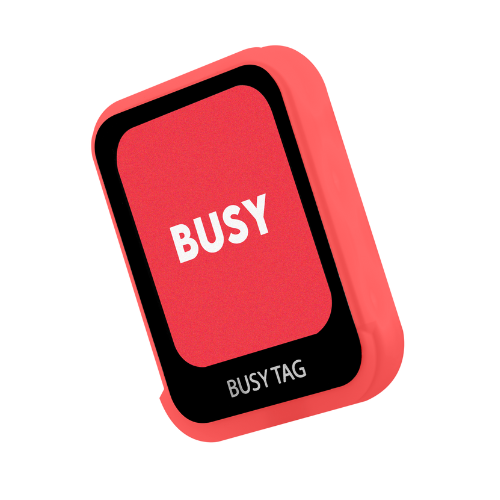
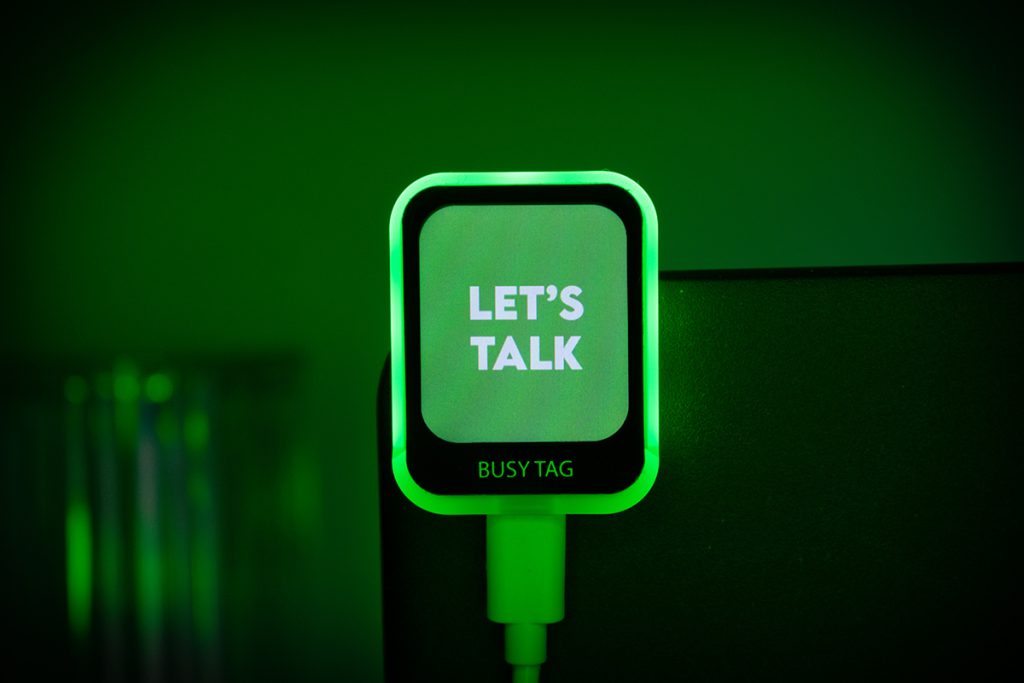
Busy Tag: Stay focused and avoid distractions
Here are some common examples of the tasks companies can automate with AI:
- Data entry. AI models can be taught to extract data from documents, emails, and spreadsheets and then enter it into the needed systems accurately and quickly. They eliminate the need for time-consuming and error-prone manual data entry.
- Customer service. AI-powered chatbots can easily handle routine customer inquiries. When used correctly, the algorithms can free up human agents to tackle more complex issues. An AI chatbot generator is the easiest way to automate your customer service. In addition to reducing response times, the algorithms can enhance customer satisfaction rates.
- Email management. AI can sort, prioritize, and sometimes even respond to emails based on content and sender, helping employees manage their inboxes more efficiently.
- Report generation. As AI algorithms can rapidly collect data from multiple sources, analyze it, and generate reports automatically, they’re a powerful time-saver that also ensures the accuracy of the reports. Integrating tools like a Firebase connector can further enhance data collection and synchronization, making the process even more efficient and seamless.
- Scheduling. AI can help each employee optimize schedules for meetings and appointments. They enable your staff always to use their time and resources effectively.
- Inventory management.The models can also be trained to track inventory levels using inventory management tools in the supply chain and optimize logistics, which can help your business avoid both stockouts and overstocking.
Here are some of the benefits of AI-driven task automation:
- Increasing productivity. When mundane, time-consuming tasks are taken care of, the employees are able to dedicate their efforts to more challenging activities.
- Reducing errors. Since there will be no more human error, process accuracy will increase, and massive overall efficiency gains can be expected.
- Saving costs. The labor costs and operational expenses will be lower as well.
- Speeding up processes. Automated tasks are completed vastly faster than manual processes. So, utilizing AI models can result in quicker turnaround times and allow your business to respond to market demands faster.
- Improving customer satisfaction. Clients always want businesses to respond faster. Therefore, if you use the always-available, helpful AI-powered agents for support purposes, you can achieve enhanced customer satisfaction and, ultimately, higher rates of customer retention.

The Power of Data Analysis in AI
Data analysis is another big way AI drives your company’s productivity. The models process large amounts of data and, if trained and fine-tuned properly, they can accurately identify trends and measure performance to predict future outcomes.
These are some of the benefits of AI-powered data analysis:
Better decisions. With AI, you can ensure your staff’s decisions are always based on data-driven insights rather than gut feeling. This approach to decision-making inevitably leads to more accuracy and better business outcomes.
More profits. The models can also help you identify overlooked ways to improve workflows and processes. They are powerful tools that can help large and small businesses quickly increase efficiency and profitability.
Better customer understanding. AI algorithms are surprisingly good at reading humans. An effective AI model can break down customers’ behavioral patterns to a granular level and help you anticipate their needs. The insights it provides can assist your business in tailoring products and services precisely to clients’ preferences.
Competitive advantage. You can use AI tools to beat the competition. The algorithms are great at picking up general market trends, and you can also apply them to track and analyze competitor activities.
Solving problems proactively. With AI, you can detect potential issues faster and thus prevent them from turning into significant problems. Being proactive and fixing minor problems before they turn into something more damaging is a sure way to avoid costly disruptions in the long run.

AI for personalized work
AI can dramatically improve productivity by tailoring work experiences to individual needs and preferences. However, to ensure ethical use and maintain user trust, businesses must also focus on ways to humanize AI, especially in customer-facing tools like live chat services AI-driven chatbots and virtual assistants. The algorithms can empower employees to work more efficiently, effectively, and happily. Here’s how:
- Assigning tasks intelligently. AI assigns tasks based on employee strengths, skills, and workload, leading to higher job satisfaction and efficiency.
- Customizing tools and interfaces. AI tools can adapt to individual user preferences, helping employees optimize workflows and thus increase productivity.
- Personalizing learning. AI makes it easy to create highly customized training programs. The models can generate programs that take into account each individual’s learning style, strengths, and knowledge gaps. AI-enhanced learning methodologies can, therefore, accelerate your staff’s skill acquisition and largely raise employees’ performance and productivity.
- Enhancing decision-making. AI models’ insights, if you’ve implemented the algorithms correctly, can assist even the newbie employees in making faster and better decisions.

AI and Workplace Solutions
When AI is combined with a range of innovative workplace products, the potential for productivity gains is immense. AI tools can simplify processes, while Luxafor’s solutions are perfect for creating a more pleasing work environment. Our products feature visual indicators, interactive buttons, LED-based technology, and air quality sensors. When used in tandem with sophisticated models, they can greatly contribute to overall employee well-being, efficiency, and motivation. And when employees are comfortable and eager to perform, the productivity increases your business can achieve are truly astonishing.
In summary, it’s a good idea to leverage AI development services from seasoned vendors and advanced workplace solutions from Luxafor together. By creating environments that foster engagement, efficiency, and employee satisfaction, businesses can achieve a “super boost” in productivity.
Conclusion
AI is unquestionably a huge catalyst for productivity if used correctly. The models automate routine tasks and help companies deliver personalized experiences both to their clients and employees. It also wouldn’t be an overstatement to say that AI will soon completely change businesses’ operations across many industries. By harnessing AI and combining it with innovative workplace solutions, organizations can create environments that not only boost efficiency but also foster employee well-being and satisfaction.
As AI continues to advance, its impact on productivity will only intensify, making it an indispensable tool for businesses seeking to thrive in today’s competitive landscape.
LUXAFOR HELPS PEOPLE TO ACHIEVE THEIR GREATEST PRODUCTIVITY LEVELS WITH A WIDE VARIETY OF OFFICE PRODUCTS. LET’S BE PRODUCTIVE TOGETHER!
Why AI is The Catalyst of Productivity






Tags
Archives
- June 2026
- May 2026
- March 2026
- January 2026
- December 2025
- November 2025
- October 2025
- September 2025
- August 2025
- July 2025
- June 2025
- May 2025
- February 2025
- January 2025
- December 2024
- November 2024
- October 2024
- September 2024
- August 2024
- July 2024
- June 2024
- May 2024
- April 2024
- March 2024
- February 2024
- January 2024
- December 2023
- November 2023
- October 2023
- September 2023
- August 2023
- July 2023
- June 2023
- May 2023
- April 2023
- March 2023
- February 2023
- January 2023
- December 2022
- November 2022
- October 2022
- September 2022
- August 2022
- July 2022
- June 2022
- May 2022
- April 2022
- March 2022
- February 2022
- January 2022
- December 2021
- November 2021
- October 2021
- September 2021
- August 2021
- July 2021
- June 2021
- May 2021
- April 2021
- March 2021
- February 2021
- January 2021
- December 2020
- November 2020
- October 2020
- September 2020
- August 2020
- July 2020
- June 2020
- May 2020
- April 2020
- March 2020
- December 2019
- November 2019
- October 2019
- September 2019
- August 2019
- July 2019
- April 2019
- March 2019
- January 2019
- December 2018
- November 2018
- October 2018
- September 2018
- August 2018
- July 2018
- June 2018
- August 2017
- May 2017
- April 2017
- February 2017
- January 2017
- November 2016
- October 2016
- September 2016
- August 2016
- July 2016
- June 2016
- May 2016
- April 2016
- March 2016
- February 2016
- January 2016