
10 Ways of Making Your Team More Productive

We hear a lot about productivity these days as it is hard to be satisfied with self-efficiency in the modern world. However, productivity is crucial to maintaining any business at a high-performance level, so let's see some ways to improve it for your team.
Tips to Boost Team Productivity
A frequent topic nowadays, boosting productivity is something to look after for anyone
concerned with their growth. For a leader, it is even more complicated as business success is hugely dependent on other people's efficiency. There is a need to constantly monitor the
progress and analyze what can be done differently to correct the path and fix the dynamics
for a better outcome. Especially with a newly formed team working on a new project.
The steps a company might take to increase the productivity of an old team vs. a new one
will surely differ. People that have been working together for a considerable period of time,
are a precise clockwork that functions effectively and predictably. There are several factors
that contribute to the work so coordinated and performative with the most crucial of them
being long-time established communication. Some research shows that in the same stressful
situations teams that work together for a long time make better decisions, cooperate more
efficiently, and proceed faster with a resolution than new teams.
With just-created teams, things are a bit complicated. In theory, every employee is aware of
their responsibilities and tasks and has a skill-set needed to operate independently
performing their part of the task. However, without proper communication work might
suffer and lack speed and coordination. That’s why some steps to improve productivity
should be taken to avoid complications.
What Is Team Productivity?
When we’re talking about a highly efficient and productive team, we mean a group of colleagues that collaborates systematically and is result-oriented. Individual productivity matters in team productivity, but without the right dynamics, a group of high performers can be absolutely useless as a team. You need to create a unit where every member compliments the project with their skills and is able to cooperate and contribute effectively toward shared goals. This involves fostering open communication, encouraging mutual respect, and ensuring that everyone understands their role and responsibilities within the team.
Practical Tips to Increase Team Productivity
While every member tries to do their best to contribute to the project’s success, a team leader or company management should assist by doing all possible to help the team do their job properly. Some tips to encourage steady performance and boost productivity are listed below:
Communication is the key
Professional skills are what brought people here, soft skills are what helps them keep their positions. The ability to communicate properly, express your thoughts and expectations as well as air concerns is extremely important for personal growth as well as for efficient teamwork. Companies should encourage clear and transparent communication, providing means for it and facilitating the process. The team should get constant updates about the general state of the project and be able to determine responsibility areas. People operate differently which may result in misunderstandings and varying views on the same subject. Regular checkups are necessary to ensure all team members are on the same page.
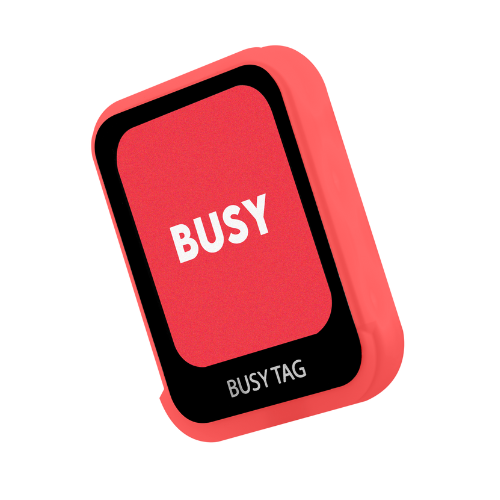
Busy Tag: Stay focused and avoid distractions
Offer a clear and precise plan
The team should be aware of what is expected of their collective and individual efforts. Vague end and intermediate goals are not good guidelines to follow and will result in confusion and low productivity. While every team does need some freedom to decide, knowing what the exact plan is helps them see the whole picture and act accordingly.
Learn the team’s strengths and weaknesses
The best-case scenario is if it’s done prior to forming the team. However, it’s never too late to readjust responsibilities according to who performs better in which area. Of course, a perfect employee does not exist, but it’s more efficient to benefit from one’s strengths than try to fix their weaknesses. One team member can be better with numbers, while the other is an excited communicator or a creative mastermind. Assign them tasks considering their advantages and your team will be more productive and viable.
Healthy work environment matters
Talking about a healthy work environment we mean a place where every employee can be open and trust their colleagues, take ownership of their work, have efficient communication and maintain a work-life balance while using growth opportunities. A friendly and cooperative atmosphere helps keep the mood and encourage positive thinking lowering stress levels. Other than this, a healthy workplace matters as well.
A healthy workplace is well-organized and utilizes health practices providing a proper physical and psychosocial work environment. It should be comfortable and suitable for day-long activities, have resting and green zones, and ensure enough light and fresh air flow.
Guide, don’t hover
The way a team is managed is also crucial to keep it going. While modern tendencies already criticize micromanagement as well as excessively strict control, not every company denies such practices in order to better monitor staff operations. However, with more freedom, better results can be achieved, as total control creates unnecessary tension and animosity between the team and the management. When put in doubt constantly, people tend to stick to the protocols and don’t go the extra mile to perform to their fullest. While progress monitoring is important for every project, overdoing it will only bring frustration and a mediocre outcome at best.
Monitor, correct, update
Most projects are divided into several stages with mandatory checkups on each. This way, you are able to keep track of overall progress, ensure timely completion, and assess the team’s performance. In the process, it might become evident some adjustments are to be made. It’s a good thing, as you have an opportunity to reassess certain points of the project and relocate attention to where it is needed most. Constant evaluation helps you use your team skills more efficiently which would benefit the end result.
Time management
Sticking to the schedule is important as it keeps the project in an established time frame. Time management ensures that tasks are prioritized based on urgency and importance allowing for allocating resources strategically, ensuring that everyone is working on tasks suited to their skills. Clear schedules and realistic deadlines help team members avoid the stress of last-minute rushes, contributing to a healthier work environment. Setting timelines and tracking progress helps hold everyone accountable. Tools like a life coaching app can also support better organization, goal tracking, and accountability, making it easier to identify weaknesses and address them promptly.
Acknowledge, encourage, inspire
It is important to celebrate small wins and show recognition when it’s deserved. Long-time projects may be taxing and some encouragement in the middle of the process can go a long way in keeping the team focused and inspired. Emphasize results over hustle, notice a fresh approach and creativeness, and express your approval of innovative solutions.
Avoid overloading with follow-ups
We’ve all seen the meme about “this meeting could have been an email.” While checkups and communication are important, too many meetings are destructive and exhausting. It is important to measure them properly and avoid overscheduling with follow-ups. At those meetings you insist on holding, do the following:
- Announce an agenda beforehand and allow people some time to prepare
- Have a plan and time frame and stick to them
- If it is one of the regular meetings and you plan to bring changes to it, let people know in advance
- Ensure remote team members can also join and participate
Trial and error protocols
The team or some members may come up with a brilliant new idea that needs to be checked. They should be free to discuss and try the new approach without strict consequences if the idea fails. It is important to distinguish the wrong idea from bad performance and react in a way that will not nip any future creativity in the bud.
Conclusion
Boosting team productivity is a complex challenge that requires thoughtful planning, strategic leadership, and consistent effort. While there is no universal approach, certain principles stand out as essential. By maintaining a collaborative environment, setting clear goals, and leveraging individual strengths, teams can achieve remarkable results.
Effective communication lies at the heart of productivity. When team members feel heard and valued, they are more likely to share ideas, voice concerns, and contribute their best work. Leaders who actively encourage dialogue and create opportunities for feedback can bridge gaps, resolve conflicts swiftly, and build stronger bonds within their teams.
Equally important is the use of time management strategies. Teams that organize their work properly, set realistic deadlines, and prioritize tasks effectively tend to operate more smoothly and efficiently. This not only minimizes stress but also ensures that resources are distributed correctly and used where they are needed most, driving projects forward without unnecessary delays.
Motivation and encouragement are key factors in maintaining high productivity levels. Recognizing achievements, celebrating milestones, and offering growth opportunities inspire team members to stay engaged and perform at their best. Encouraging a healthy work-life balance also contributes to sustained productivity by preventing burnout and preserving energy for creative problem-solving.
The use of technology and tools tailored to team needs can further enhance productivity. From project management software to communication platforms, these resources streamline processes, automate repetitive tasks, and improve access to information, allowing teams to focus on what matters most.
Ultimately, productivity thrives when teams operate as units and every individual’s efforts align with shared objectives. This requires leadership that is both proactive and supportive, ensuring that issues are addressed and opportunities are maximized.
Nowadays, adaptability is perhaps the greatest competitive advantage. Teams that embrace change, continuously learn, and refine their approaches are better equipped to navigate challenges and seize opportunities. By committing to these principles, organizations can not only boost productivity but also create environments where innovation and success are most likely to happen.
LUXAFOR HELPS PEOPLE TO ACHIEVE THEIR GREATEST PRODUCTIVITY LEVELS WITH A WIDE VARIETY OF OFFICE PRODUCTS. LET’S BE PRODUCTIVE TOGETHER!
Show your colleagues when you're busy!
10 Ways of Making Your Team More Productive







Tags
Archives
- March 2026
- January 2026
- December 2025
- November 2025
- October 2025
- September 2025
- August 2025
- July 2025
- June 2025
- May 2025
- February 2025
- January 2025
- December 2024
- November 2024
- October 2024
- September 2024
- August 2024
- July 2024
- June 2024
- May 2024
- April 2024
- March 2024
- February 2024
- January 2024
- December 2023
- November 2023
- October 2023
- September 2023
- August 2023
- July 2023
- June 2023
- May 2023
- April 2023
- March 2023
- February 2023
- January 2023
- December 2022
- November 2022
- October 2022
- September 2022
- August 2022
- July 2022
- June 2022
- May 2022
- April 2022
- March 2022
- February 2022
- January 2022
- December 2021
- November 2021
- October 2021
- September 2021
- August 2021
- July 2021
- June 2021
- May 2021
- April 2021
- March 2021
- February 2021
- January 2021
- December 2020
- November 2020
- October 2020
- September 2020
- August 2020
- July 2020
- June 2020
- May 2020
- April 2020
- March 2020
- December 2019
- November 2019
- October 2019
- September 2019
- August 2019
- July 2019
- April 2019
- March 2019
- January 2019
- December 2018
- November 2018
- October 2018
- September 2018
- August 2018
- July 2018
- June 2018
- August 2017
- May 2017
- April 2017
- February 2017
- January 2017
- November 2016
- October 2016
- September 2016
- August 2016
- July 2016
- June 2016
- May 2016
- April 2016
- March 2016
- February 2016
- January 2016